Say a patient types “dentist” or “doctor” or “cardiologist” into Google. They need to find help. Your practice offers the best help. It really is the best. The problem is your website is not among the results in Google. They visit another practice and book an appointment with them instead.
It’s frustrating when your practice has qualified, experienced, and helpful doctors and medical services. You can even offer the best prices in town, but patients simply will not come to you if they cannot find you.
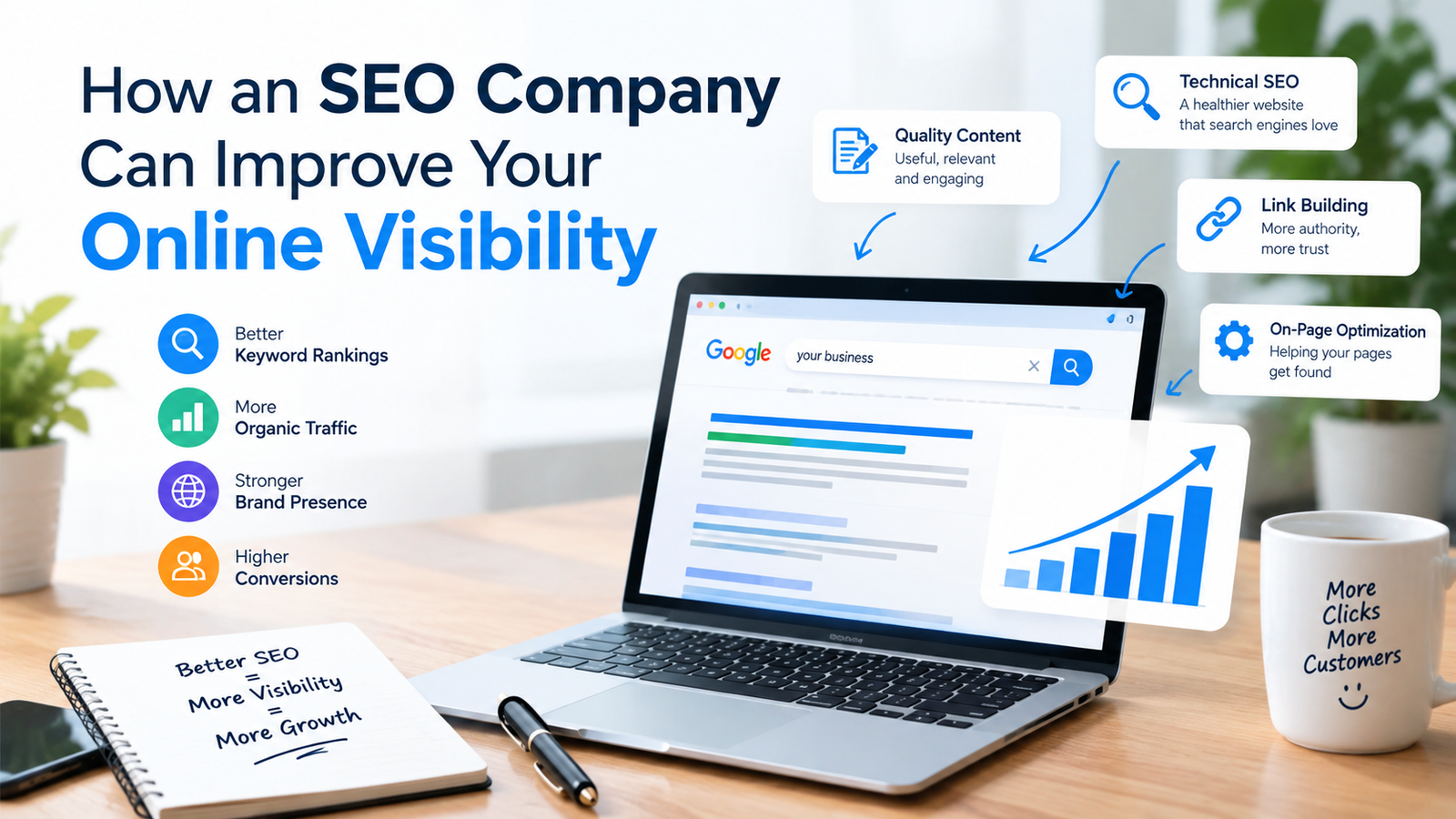
It’s one thing to build a great looking website. But you have to know how patients will find your services in the first place. You have to think beyond website design, and I strongly recommend you search for and use healthcare SEO. Healthcare SEO services can help patients find you. They address the challenges of making you visible to search engines and help potential patients find the right information.
When writing content in the future, it is essential for healthcare businesses to consider their needs and goals for SEO. Writers must have an understanding of what patients want and how search works, as well as the need for medically accurate and safe content. I will highlight what problems many healthcare businesses fail to see and how they can easily be solved.
The Hidden Problem: Patients Search Online, but Your Practice Remains Invisible
Problem: Your healthcare website may exist, but that does not guarantee that patients will find it through Google. Competitors might rank higher because they have better service pages, stronger local listings, more useful content, or fewer technical problems.
Agitation: Every missed search creates a potential lost opportunity. For example, someone searching for “orthopedic doctor near me” wants to find relevant specialists, understand their services, and learn how to book an appointment. If your website does not appear for relevant searches, that person may never discover your practice.
Solution: Start with a complete SEO audit. Review your website rankings, Google Business Profile, service pages, technical performance, and competitors. A reliable healthcare SEO agency can use these findings to identify the problems that limit your online visibility and prioritize the improvements that matter most.
As I found through my research, healthcare SEO works best when a practice understands why it struggles to attract relevant visitors instead of publishing more content without a clear plan.
Your Website Targets Keywords but Misses Patient Intent
Problem: Healthcare sites are not properly using Google because they address questions with keywords that are too broad.
Agitation: For instance, if a patient is in Manchester, England, and is searching for a knee specialist, they are likely not going to find a doctor by searching the general keyword, “healthcare services.” Most of the pages will just tell you the medical services that are available at their location. Patients will most likely have to leave that page, go to another page and guess on whether the medical specialist is even able to help.
Solution: Patients want their questions addressed as simply and efficiently as possible. Instead of one broad, long webpage, break everything up. Separate services and specialties to dedicated pages, and provide a FAQ section. The scheduling section should also be clearly laid out with simple, accurate, and detailed instructions on how to set up an appointment.
With a dedicated SEO consultant on your side, you can have a team dedicated to helping your customers address the right topics.
Weak Local SEO Makes Nearby Patients Choose Competitors
Problem: A healthcare practice may be offering quality services, but it does not guarantee visibility in local searches. Sometimes having un-updated information and uncorrect details can impede visibility in search results.
Agitation: A dental clinic may provide access to residents of three significant neighbour-hoods. However, in its profile, the clinic does mention its name, but nothing about the area of serv-ices. Meanwhile, a rival clinic can be very successful due to correct data on Google pages.
According to Google, distance, relevance, and prominence define local search results. Providers may not be able to affect all of the aspects but they can work on their performed information.
Solution: A healthcare SEO agency can boost your Google Business Profile, have the cor-rect business information, and enhance the location pages.
As far as I know, local SEO is not just using the city name in the text. The website must detail what services you offer the patients and how they can reach you.
Technical Website Problems Can Cost You Patient Enquiries
Problem: Slow page, broken links, confusing navigation, poor mobile usability, and various indexing errors keep your patients away from your website.
Agitation: Imagine a patient trying to open your website from their smartphone. The page is too slow to load, the contact number is not clickable, and the appointment form fails to submit the request. As a consequence, the patient will choose another provider.
Measurement of the Google Core Web Vitals includes loading capacity, interactivity, and visual stability. The recommended metrics assume a Largest Contentful Paint of up to 2.5 seconds, an Interaction to Next Paint with 200 ms or less, and a Cumulative Layout Shift of about 0.1 at the 75 percentile.
Solution: An SEO medical firm can identify technical issues, fix mobile usability problems, check for indexing issues, fix broken links and cooperate with developers in improving the page performance. In addition, the team should regularly test appointment forms and contact methods.
In my experience regarding content strategy, attracting users is only one of the key steps. A healthcare website has to make it simple for users to acquire the needed information and make the proper next step.
Thin Medical Content Fails to Build Patient Trust
Problem: Some healthcare portals provide brief, generic entries that provide little accurate information. Others contain obsolete medical guidance, unverified claims, or content that does not mention the name of the author.
Agitation: Users require reliable information to contact a healthcare specialist. If your competitor describes a therapy, its advantages and disadvantages, and when it is better to seek a professional consultation, this page may serve users better compared to a brief article full of repeating key words.
Google recommends providing useful, reliable users-first information. Besides, it pays more attention to reliability and expertise when evaluating materials on health and other important topics.
Solution: A medical SEO company should cooperate with qualified medical specialists to check the medical information published. The authors should use reliable sources of information, define professional terms in simple English, provide relevant quotations, and update information if medical advice changes.
Future content writing will require more than being fast. AI instruments will help authors conduct research, write outlines, and organize their materials. However, authors will still have to check the information presented and avoid showing obtained facts as established.
Missing Service Pages Create Gaps in Search Visibility
Problem: There are some websites which depend on the single homepage that explains all specialties and treatments. And this approach does not provide patients with enough information.
Agitation: Imagine a clinic that provides physiotherapy, sports injury treatment, and rehabilitation after surgery. The clinic creates just one small page with a brief overview of all three services. This homepage might not answer many questions regarding each treatment. Patients may turn to competitors, which have dedicated pages for each service.
Solution: Instead, you should create separate informative pages about your main treatments. Every page should cover the treatment itself, qualifications of the medical team, the process of making an appointment, and the location of the clinics. That way, each patient will be able to find enough information they need on the treatment they are interested in.
A healthcare marketing consultant will do proper keyword research and competitor analysis to find missing pages. But the goal is to create not hundreds of pages. Instead, each page must have meaningful content and useful information on it.
A Real Healthcare SEO Case Study: What the Numbers Tell Us
According to information obtained from a healthcare SEO case study compiled by Focus Digital, Koher Medical experienced quite a jump in organic web traffic from 202 in December 2023 to 1,777 in May 2024. In addition, in May 2024, 31 consultations were scheduled as a result of odontological web conversions compared to nothing booked in December 2023.
These statistics prove the significance of tracking more than just your rankings. Organic visibility helps you attract important web traffic, whereas conversions will show you how valuable this traffic is.
At the same time, a single case study doesn’t guarantee similar results from your clinic. The number of clients you get depends on your competition, location, website condition, demand for your services, the execution of your campaign, and the quality of metrics.
Google Search Console offers insights into impressions, clicks, click-through rates, and average search position. Healthcare companies can take advantage of these metrics to find out which search queries increase their visibility, and which web pages drive traffic.
As I discovered from my research, a meaningful SEO report should tie in these metrics with qualified enquiries and booked appointments whenever tracking technology allows it.
How to Choose the Right Healthcare SEO Partner
Choosing the right agency is not as simple as looking at the cost of their services. An effective healthcare SEO company should have knowledge of technical SEO theories, local search techniques, quality of medical content and patient behaviour while searching for information.
Find out how the selected agency intends to define ranking issues, work with medical claims, measure requests and generate reports. An experienced medical SEO agency has to be able to express its consulting opinion freely and indicate understanding of the situation without making improbable promises about appearing on the first page of web search results.
Pay attention to the way the agency is protecting its clients’ private information. Handling the healthcare forms and analytics can imply the usage of sensitive data requiring the firms to comply with privacy laws and apply proper protection measures while collecting or sharing the private information of patients.
Choose a partner specializing in useful content, accurate information, sustainable visibility and measurable business results.
Conclusion: Make Your Healthcare Practice Easier to Find
Your practice may be failing to seize opportunities online because of such issues like insufficient local visibility, absence of service pages, technical inaccuracies, or uninformative content.
The best way to overcome such problems is through a well-developed SEO strategy. Start with an analysis of your website, evaluate your presence online, improve your service pages, and focus on relevant inquiries instead of rankings only.
What I learned from my research is that the future of writing in healthcare belongs to experts who know how to combine SEO while providing factually correct information, understanding the patients, and communicating clearly. AI will change the way content writers do their research and writing, but the need for human beings to check the information and explain their findings will remain.
Be it a healthcare SEO consultant you are working with, or it’s a medical SEO company, the aim is still the same – to help your patients and provide them with the necessary information about your services.